

For emergency response teams, the gap between a coordinated response and one that falls behind often comes down to how well responders understand what’s happening around them and where it’s heading. What is situational awareness in that setting? It’s less a single skill than a working habit, one that shapes everything from how a dispatcher prioritizes a call to how a patrol unit approaches an unfamiliar scene.
In this article, we look at where the concept comes from, why it matters most under pressure, what typically causes it to break down, and how agencies build and maintain it during active incidents.
Table of Contents
What Is Situational Awareness?
It’s a well-studied concept borrowed from aviation and military research: the ongoing process of perceiving what’s happening in your environment, understanding what that information actually means, and using it to anticipate what comes next. Emergency response teams depend on the same process every shift, whether that’s a dispatcher tracking a fast-moving incident or a patrol unit walking into an unfamiliar scene.
The most widely cited framework comes from human factors researcher Mica Endsley, whose 1995 paper in the journal Human Factors described situation awareness as a three-level process rather than a single skill. The model has since become a standard reference across aviation, the military, and other safety-critical fields, public safety included. Each level builds on the one before it, and a breakdown at any stage weakens the whole picture.
| Level | What It Means | Example in Dispatch |
|---|---|---|
| 1. Perception | Gathering raw information from the environment | A call taker notes background noise, a caller’s tone, and the location on the map |
| 2. Comprehension | Understanding what that information means together | Recognizing that the call type, location, and recent activity nearby point to an escalating situation |
| 3. Projection | Anticipating what is likely to happen next | Requesting a second unit before the first one has even arrived, based on how the situation is trending |
Aviation safety organizations describe this same sequence as building a mental model through active observation, then checking that model against experience, then using it to stay ahead of events rather than reacting to them after they happen. In dispatch and field operations, that sequence has to happen in seconds, often with incomplete information and multiple things changing at once.
Why Situational Awareness Matters in Emergency Response
A common operating picture, or COP, is a continuously updated overview of an incident, built from data shared across communication, information management, and intelligence systems. Its purpose is to give responders real-time situational awareness across jurisdictions and levels of command, not just within a single agency or a single shift.
That purpose exists because the alternative has a real cost. A dispatcher working from a stale address sends units to the wrong location. A field unit unaware that another team already cleared a scene duplicates work that should have moved on to the next call. A supervisor who learns about a developing incident secondhand, well after it started, loses the minutes needed to reposition resources before the situation worsens. None of these are dramatic system failures. They are small gaps in the picture that compound during exactly the moments when speed matters most.
For a closer look at how agencies build that shared view in practice, see our blog post: Why a Common Operating Picture Matters in Emergency Response.
What Causes a Loss of Situational Awareness
Most breakdowns trace back to a handful of recurring causes:
- Information silos, where one agency or shift holds details that another responding unit never sees
- Delayed updates, where the picture on someone’s screen no longer matches what is actually happening
- Fragmented systems, where police, fire, and EMS each work from a different version of the same incident
- Tunnel vision under stress, where a responder locks onto one detail and misses others developing around it
None of these are unusual or a sign of poor training. They are what happens by default when information has to pass through multiple systems, radios, or people before it reaches the person who needs to act on it.
How Agencies Build and Maintain Situational Awareness
Agencies that hold onto situational awareness under pressure tend to share a few practical habits:
- A shared, real-time incident view accessible to every responding unit and agency, not just the one that took the call
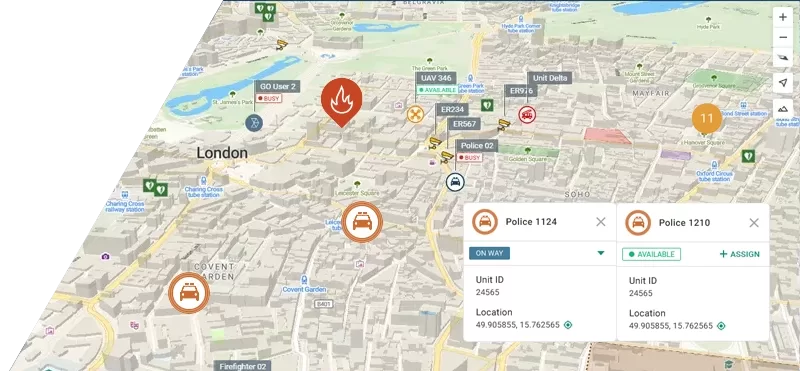
- Live location tracking so supervisors know where units actually are, not just where they were originally dispatched
- Camera, wearable, and sensor feeds tied directly to the incident record, rather than routed through a separate system someone has to check manually
- Standardized terminology and reporting, so the same piece of information means the same thing to every responder who reads it
- Regular debriefs that identify where the picture broke down during a real incident, not just in training
These habits are much easier to sustain when they’re backed by a solid dispatch management system, since that’s what keeps the live data behind each of them accurate and up to date.
How Smart CAD Supports Situational Awareness
Smart CAD, GINA Software’s computer-aided dispatch platform, is built around keeping that three-level process intact instead of letting it break down between the call taker, the dispatcher, and the field. It integrates live CCTV streams, wearable camera feeds, and IoT alerts directly into the incident view, so perception doesn’t depend on someone relaying details over the radio piece by piece. Machine-learning-assisted unit recommendations help turn that shared picture into action by pointing dispatchers toward the closest available and appropriate unit, even during high call volume.
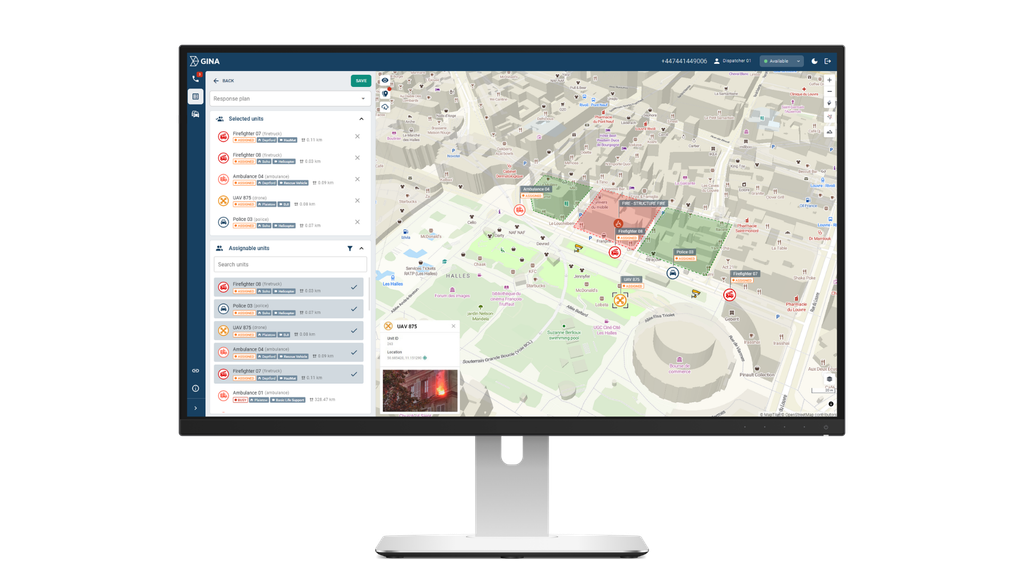
For the projection layer, that is, knowing where units are now and where they’re likely needed next, Tactical AVL gives supervisors a real-time map of vehicle location and status that multiple agencies can reference during a joint response. Neither tool replaces training or judgment. What they do is make sure the picture responders are acting on is current, not several minutes behind.
Conclusion
Situational awareness isn’t a single skill or a piece of software. It’s the combination of perceiving, understanding, and anticipating that determines how well a response holds together once the first call comes in. Agencies that treat it only as a training topic tend to see the same breakdowns repeat: stale updates, mismatched pictures between units, and decisions made a step behind the incident. The ones that also invest in the systems that keep that picture current are the ones that catch problems before they escalate.
If you want to see how Smart CAD helps dispatch teams build and hold onto situational awareness during active incidents, request a demo or explore Smart CAD directly.