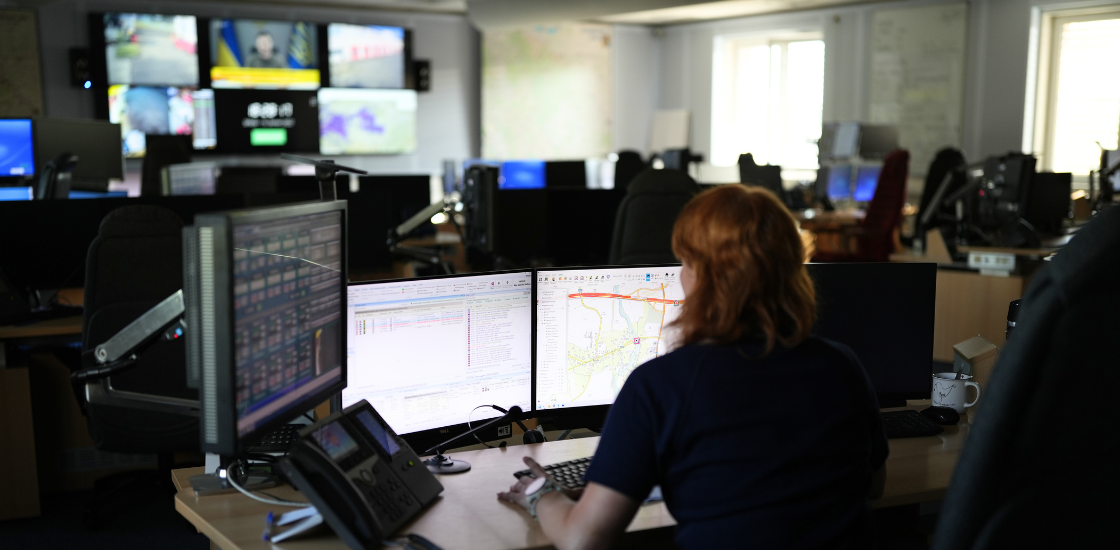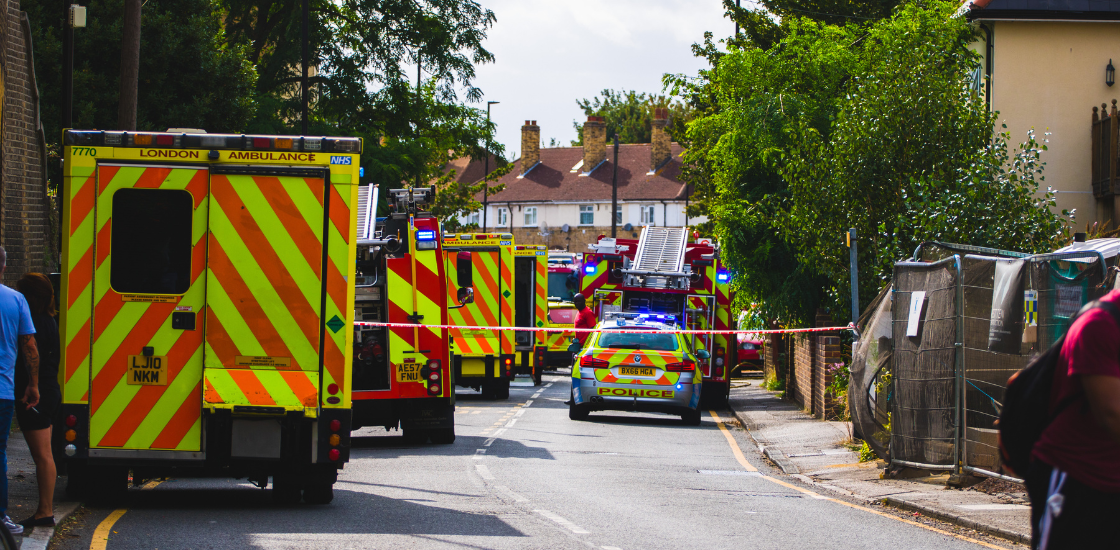
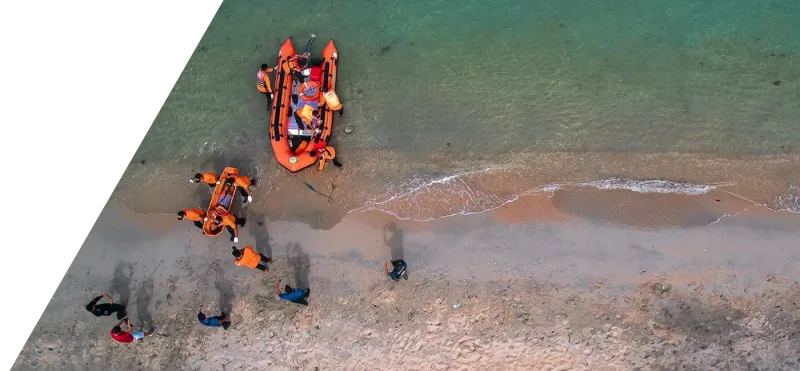
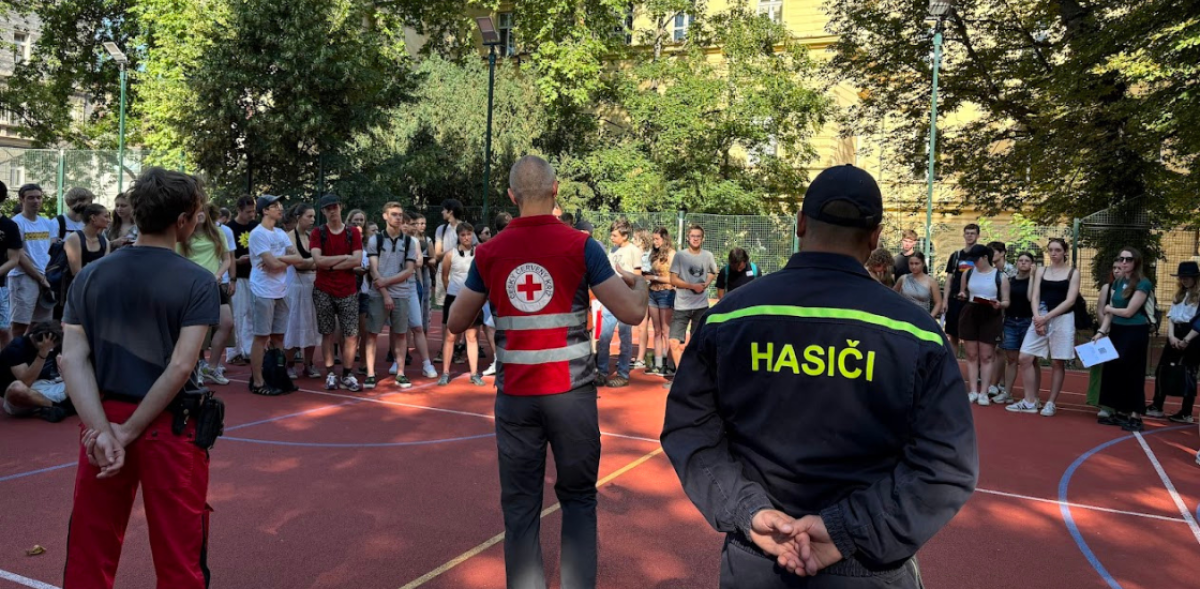
Students from Gymnázium Botičská spent a full day this June running “Urban Patrol Team 2026,” an exercise built to feel like a real emergency response, organized with the Czech Red Cross, one of the emergency response NGOs based in Prague 1. 88 of them took part, split between 26 field teams out in the city and a 9-person command center trying to keep track of all of them. Instead of radios and paper, the command center ran the whole thing through GINA Software’s Tactical AVL. Here’s how that worked, and what it showed about preparing volunteers for the real thing.
Table of Contents
The Challenge
Training volunteers to respond to a real emergency is different from teaching them the theory of one. The Czech Red Cross wanted its student volunteers to feel what an actual incident is like: teams scattered across a city, incomplete information coming in from multiple directions, and a command center that has to build a clear picture fast enough to act on it.
That’s hard to do with radios and paper alone. With 26 field teams working independently, a command center has no reliable way to see where everyone is, what they’ve already found, or where gaps in coverage remain. Reports arrive out of order, get relayed by voce, and are easy to lose. For and NGO with a limited budget and mostly volunteer staff, building a dedicated system for a single raining day usually isn’t realistic.
The Approach
On June 24, 2026, the Prague 1 branch built the exercise around a simulated citywide emergency. The 26 field teams were given scenario objectives and sent out to gather information across the city, while the 9-person command center was responsible for coordinating them and turning what came in into a shared operational picture.
Instead of relying on radio call-ins, the organizers gave field teams Tactical AVL, so each team had a direct digital line to the command center. Field teams captured what they found and submitted it straight from their location, while dispatchers watched the exercise unfold on a shared map and coordinated the response as it developed.
How Tactical AVL works
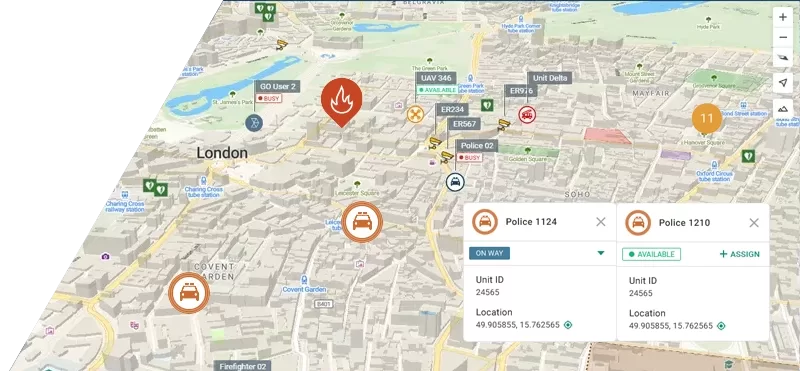
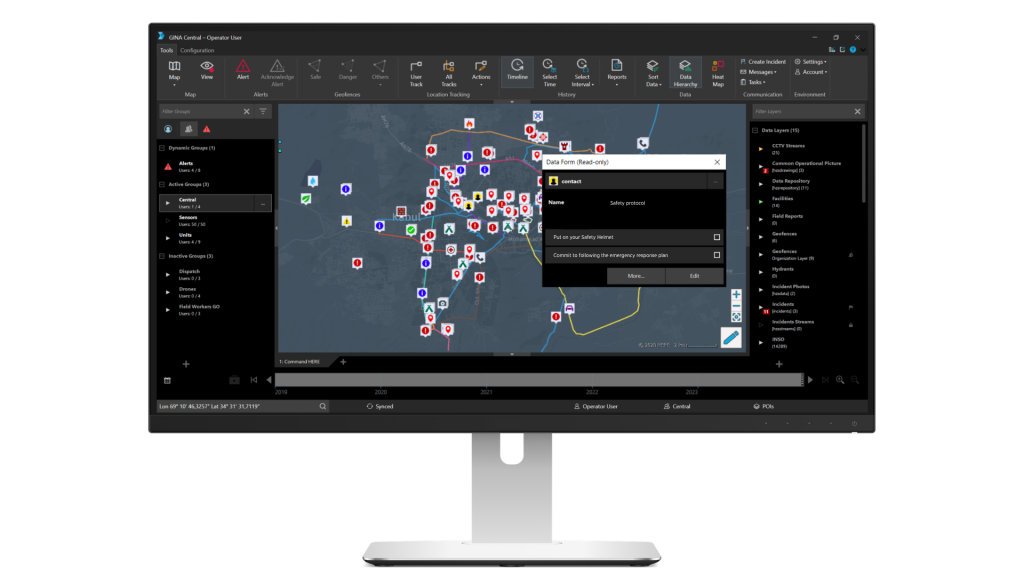
Tactical AVL answers two questions a dispatcher or field commander needs answered constantly: where is everyone right now, and what have they found. It combines automatic location tracking with structured field reporting, so both sides of an operation, the people on the ground and the poeple coordinating them, are working from the same picture.
- Live location tracking: every field team or unit appears on a shared map in real time, so command staff know current positions and coverage without asking over the radio.
- Field-to-command reporting: teams submit structured reports, notes, and observations directly from their device, and those reports reach the command center immediately instead of waiting for a verbal relay.
- A shared operational picture: dispatchers see incoming reports layered onto the live map, making it easy to spot duplicated effort, uncovered areas, or a developing situation that needs a team redirected.
- A reviewable record: every position update and report is logged, giving organizers a complete timeline to debrief once the exercise ends.
The Results
Over the course of the exercise, field teams generated more than 220 reports, all captured and transmitted in real time. The command center used that steady stream of data to track progress, coordinate the 26 field teams, and assess the developing situation as it would in an actual emergency. For the participating students, it was also a first hands-on look at the kind of digital tools that integrated rescue systems use every day.
Why It Matters for NGOs
Humanitarian and volunteer organizations rarely have the budget or IT resources of a professional emergency service, but they face the same coordination problem: getting accurate information from the field to the people making decisions, fast enough for it to matter. Radio and paper processes were built for a smaller scale and don’t hold up once a response involves dozens of teams moving independently.
Tactical AVL gives NGOs, volunteer corps, and civil defense groups a way to coordinate at that scale without building anything custom. It works for a single training day or a sustained response, and it gives leadership a live, shared view instead of a patchwork of radio calls. For organizations training the next generation of responders, it also means volunteers leave the exercise already familiar with the tools they’ll use in a real one.
Want to see how Tactical AVL could support your team? Get in touch with our team.