

Police incident management sits at the center of everyday policing. From routine calls to high-risk situations, it determines how information is handled, how resources are deployed, and how quickly teams can respond as conditions change. When incident management works well, responses are faster, coordination is clearer, and officers operate with greater confidence and safety. When it does not, small gaps can quickly turn into operational risk.
In this article, we look at what effective police incident management involves, where it commonly breaks down, and how modern approaches help maintain control under pressure.
Table of Contents
How Police Manage Incidents from Start to Finish
Police incident management is a continuous process that runs from the first alert through to incident closure. While incidents differ in scale and complexity, effective management relies on a consistent operational structure.
It starts with assessing incoming information to understand location, incident type, and potential risk. As response begins, resources are allocated and adjusted based on changing conditions and priorities.
During active incidents, coordination across dispatch, field units, and supervisory roles is essential. Incident details, decisions, and responsibilities must remain aligned, especially as more units become involved or situations escalate.
Throughout the incident, key actions and decisions are documented as part of normal operations. This creates an accurate operational record and supports review and accountability once the incident is resolved.
In practice, effective police incident management depends on clear structure, shared awareness, and consistency, even under pressure.
The Most Common Challenges Faced by Police Officers in Incident Management
Breakdowns in police incident management usually come from a few repeatable issues that create delay, reduce clarity, and increase operational risk:
- Fragmented systems: Dispatchers and commanders switch between multiple tools to build context. This slows down decision-making, complicates coordination between teams, and increases the risk of missed or delayed information.
- Delays compound under pressure: Minor slowdowns that go unnoticed during quieter periods become critical during high call volumes or fast-moving incidents.
- Manual workload bottlenecks: Duplicate data entry, searching across platforms, and reliance on radio communication for basic status updates increase workload and reduces dispatch capacity, especially when several incidents are active at the same time.
- Resource allocation: Limited real-time visibility into unit availability, location, and workload makes it difficult to assign the right resources at the right time.
- Multi-unit coordination: As incidents expand to involve multiple units, supervisors, or agencies, maintaining alignment becomes difficult. Without a shared operational picture, tasking becomes inconsistent, priorities shift without coordination, and situational updates fail to reach everyone involved.
- Inconsistent prioritization: Similar incidents are handled differently across shifts or operators, leading to uneven response and reactive escalation rather than controlled incident management.
- Limited command oversight: Without a live operational overview, leaders may deploy resources later than needed or make decisions based on incomplete or outdated information.
Addressing these points typically requires reducing tool switching, automating routine inputs, standardizing workflows, and providing real-time visibility across dispatch and command.
Smart CAD as the Central Police Incident Management Platform
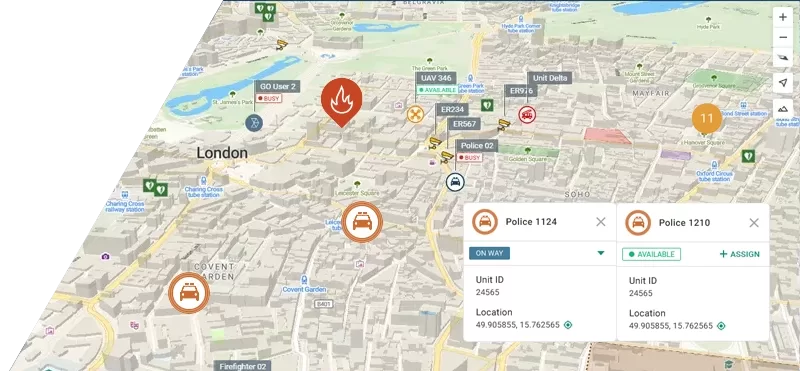
Smart CAD functions as a centralized platform for police incident management, aligning dispatchers and leaders through real-time coordination and structured operational workflows.
Smart CAD allows dispatchers to quickly create incidents and provide ongoing updates while maintaining a clear, structured workflow. The system is designed to reduce friction during peak workloads so that dispatchers can focus on prioritization, resource allocation, and coordination. Real-time visibility of incidents and resources helps maintain operational control even under changing conditions.
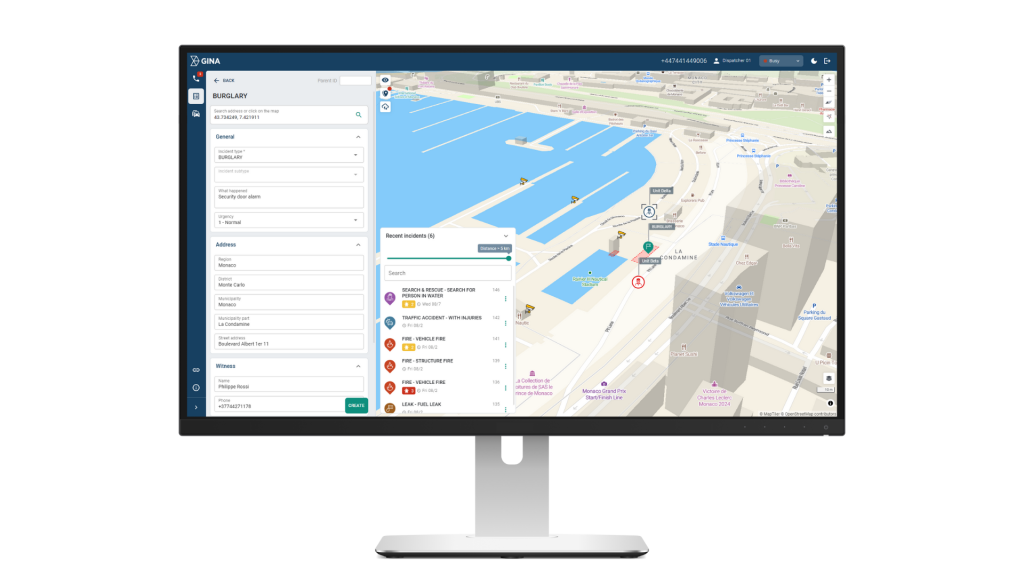
For police leaders, Smart CAD provides live oversight across active incidents, unit deployment, and overall operational status. This supports faster, more controlled escalation, especially in multi-unit incidents where decisions depend on clear understanding of available capacity and priorities.
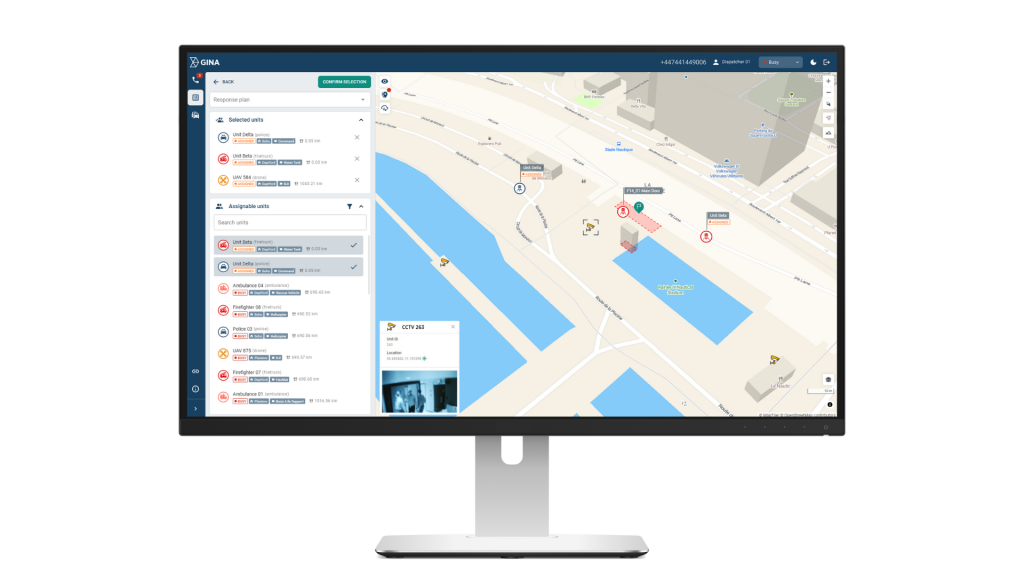
Smart CAD integrates external systems into the incident view, allowing teams to use additional operational information during response. This includes CCTV feeds that help verify reports and strengthen situational awareness, as well as drone video streams that can provide immediate aerial context for searches, public order incidents, perimeter control, and evolving threats. By linking these inputs directly to incidents, teams reduce time lost to tool switching and improve alignment across dispatch and command.
As operations progress, key updates, timestamps, and status changes are captured within the incident timeline. This creates a reliable operational record, supports after-action review, and reduces the need for manual reconstruction after the incident.
Improving Coordination Across Dispatch and Command
For dispatchers, this means being able to work faster without feeling rushed. Information is structured, updates are clear, and resource status is visible, which reduces unnecessary follow-ups and helps keep focus on what matters most as calls come in.
For police leaders, it means staying connected to what is actually happening. A live view of incidents and unit activity makes it easier to understand pressure points, adjust priorities, and step in early when situations begin to escalate.
When dispatch and leadership share the same operational picture, coordination becomes more natural. Information does not have to be repeated, decisions are easier to align, and accountability is built into the way incidents are managed.
Discover how Next-Generation Police CAD fits into daily police operations.