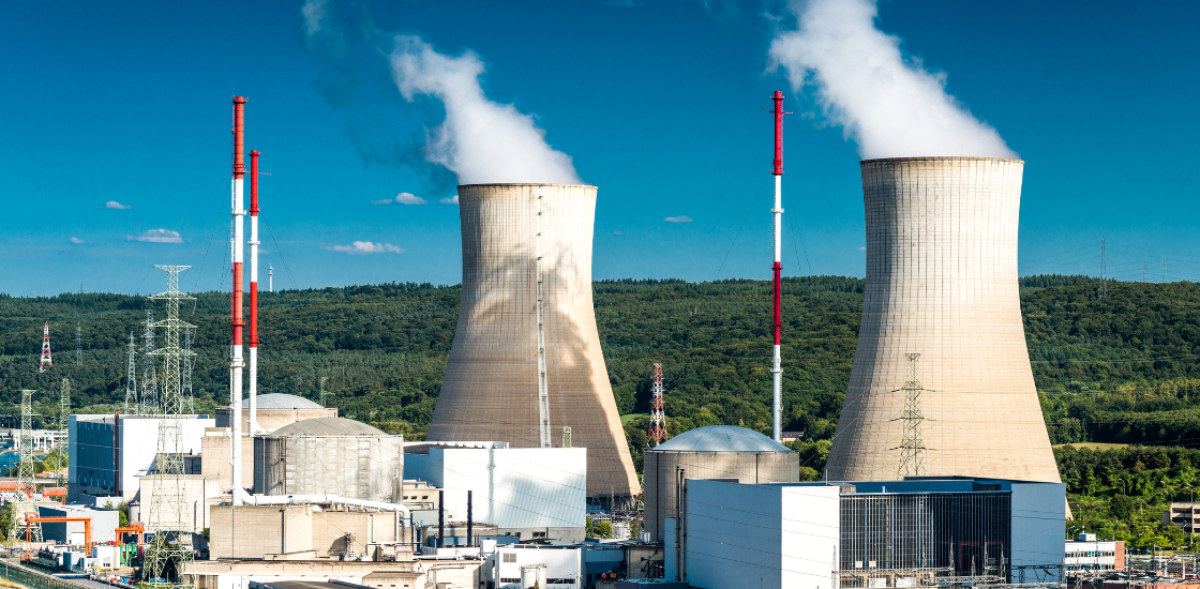
Nuclear power station security carries responsibilities that extend far beyond the site itself. Unlike most critical infrastructure, even a single security lapse can have serious consequences for public safety, national stability, and public trust. This reality places constant pressure on security operations to remain accurate, coordinated, and dependable in every situation.
Within nuclear environments, security is not limited to preventing intrusion. It requires ongoing oversight of people, systems, and information within an operational context defined by strict regulatory requirements and high accountability.
In this article, we look at why this level of oversight is essential and how integrated security systems help nuclear power stations manage risk without compromising control or efficiency.
Table of Contents
Why Nuclear Power Station Security Requires a Different Approach
Nuclear facilities combine high-risk assets, complex technology, and an exceptional level of regulatory oversight. In this environment, security teams cannot rely on isolated tools or purely reactive procedures. The consequences of failure are too serious, and daily operations are too interconnected, for fragmented approaches to work.
Every security decision involves balancing regulatory obligations, safety requirements, and the reality of continuous plant operations. Security teams continually balance access restrictions with operational needs, fast response with proper verification, and on-site decision-making with centralized control. Effective nuclear power station security software provides clear structure, a shared operational picture, and coordinated command, enabling teams to respond with speed and confidence while maintaining control in high-pressure situations.
Operational Complexity and Security Gaps in Nuclear Facilities
Even under normal conditions, nuclear power stations are operationally dense environments. Facilities are divided into multiple security zones, each with specific access rules, monitoring requirements, and response protocols. Security teams work side by side with plant operations, safety specialists, maintenance staff, and external partners, all with different responsibilities and priorities.
Shift-based work, strict documentation requirements, and long asset lifecycles add further complexity. When an incident occurs, this complexity can quickly overwhelm teams if information is not clearly structured and shared. What feels manageable during normal operations can become difficult to control under pressure.
Many security challenges do not come from missing technology or insufficient staffing. They result from how information is exchanged during an incident. Siloed systems fail to share context, incident severity is not always clear early on, and manual reporting becomes a bottleneck when speed matters most. At the same time, limited command-level visibility forces leaders to rely on fragmented updates instead of a clear operational picture.
These gaps rarely show up during audits or planned drills. They appear during real events, when teams are under stress and precise coordination is essential to maintain safety and control.
The Role of Integrated Incident Management Software
Integrated incident management reduces these weaknesses by handling security incidents as coordinated operational events rather than isolated alerts. Instead of managing alarms, messages, and reports separately, teams work from a single, continuously updated operational picture.
This approach provides structured workflows for incident handling, clear roles and responsibilities, and continuous visibility of resources and actions. It supports disciplined decision-making while allowing flexibility when conditions change. For nuclear power station security, this structure is essential to maintain control without slowing response.
How Smart CAD Supports Nuclear Power Station Security
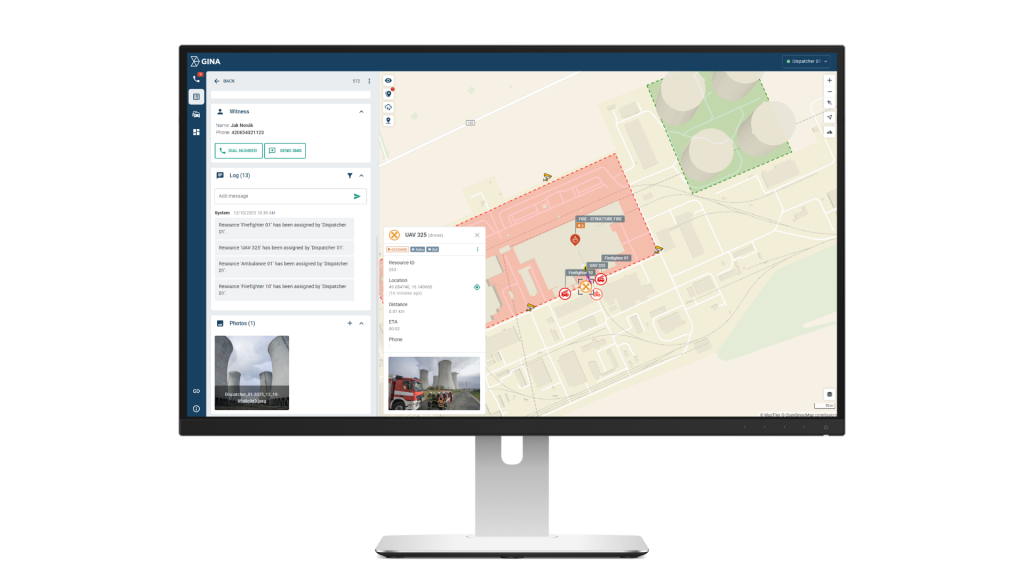
Smart CAD supports nuclear power station security through a set of integrated capabilities designed for high-consequence environments:
- Unified incident management platform
All security incidents are handled within a single system, using structured workflows that reduce fragmentation and support consistent response from alert to resolution. - Integrated live video and sensor context
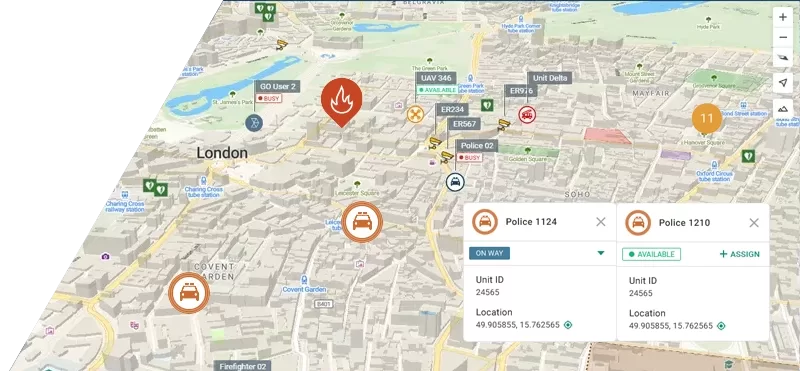
CCTV, drone feeds, and body-worn cameras are linked directly to incidents, providing immediate visual verification and situational clarity. - Real-time tracking of security units and vehicles
Live location data shows the position, movement, and availability of patrols and response teams across all security zones.
- Intelligent dispatch and response coordination
Dispatchers can assign the nearest and most suitable units, supported by system recommendations based on location, role, availability, and operational priority. - Geofencing and automated security alerts
Virtual perimeters and defined points of interest trigger automatic alerts when breached, supporting early detection around critical assets. - Mobile operations and personal safety tools
Field personnel receive assignments, update incident status, share information, and use an SOS button for immediate escalation directly from mobile devices. - Automated reporting and audit readiness
Every action and decision is logged automatically, supporting compliance, investigation, and continuous improvement in nuclear power station security operations.
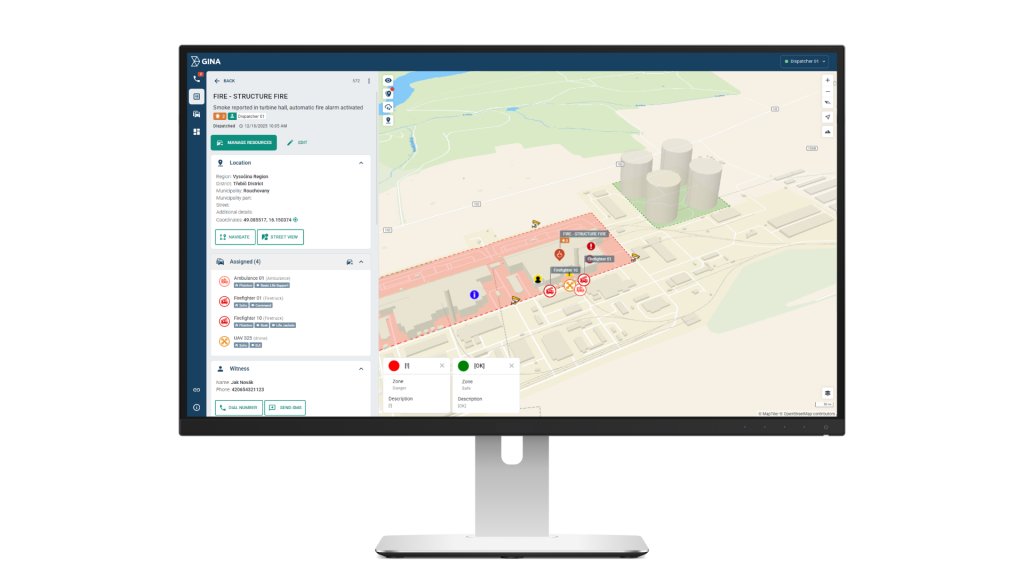
Together, these capabilities give security teams a clear, shared operational picture and the tools to act decisively without losing control. By connecting incidents, people, and information in one system, Smart CAD helps nuclear power stations manage security events with consistency, accountability, and confidence, even in high-pressure situations where precision is critical.
Operational Scenario Example
Consider a perimeter intrusion alert triggered during a night shift. Rather than handling the alert in isolation, Smart CAD immediately creates and links it to a structured incident record. Dispatchers can verify the alert using connected sensors, cameras, and access control data, allowing them to quickly determine whether the threat is real or false.
Once confirmed, on-site security units are assigned directly within the incident workflow. Their positions and status are tracked in real time, giving command staff a clear view of who is responding, where they are, and how the situation is evolving. Updates from the field, verification steps, and decisions are logged automatically as the incident unfolds.
If the situation escalates, external responders can be brought into the process in a controlled manner, with clear roles and shared situational awareness. Throughout the response, Smart CAD maintains a single, consistent operational picture, ensuring actions remain coordinated and fully documented. The result is a controlled response that supports safety, accountability, and post-incident review.
Coordinated Security for Nuclear Power Stations
Nuclear power station security goes beyond detecting threats and reacting to alerts. It requires integrated operations that preserve control, situational clarity, and regulatory compliance in every scenario. Centralized incident management and shared situational awareness are essential to achieving this balance without slowing response or increasing risk.
For organizations responsible for protecting nuclear facilities, security must be approached as a core operational function, not a collection of isolated tools. Systems designed for high-consequence environments provide the structure and visibility needed to support disciplined decision-making, consistent execution, and long-term resilience.
To learn how Smart CAD supports coordinated security and incident management in power generation environments, explore our dedicated Power Plant Security solution page.