
Every year, unplanned incidents in mining cost operators far more than the immediate response suggests. The visible costs are easy to count: equipment downtime, emergency response, medical expenses, and regulatory penalties. The harder costs accumulate in the hours that follow, as teams work to confirm what happened, establish who is responsible for what, and decide when conditions are safe enough to resume normal operations.
This article looks at how a mine safety management system reduces those costs by keeping verification, coordination, and documentation disciplined from the first alert onward.
Table of Contents
When the Rhythm Breaks, the Real Cost Starts
Mining operations run on rhythm. Shift handovers, predictable haul routes, coordinated movement across a complex site, and clear lines of communication between dispatch, supervisors, and field crews. That rhythm is not just operational convenience. It is the structure that keeps people safe and production moving. When something breaks it, the quality of the response determines how much of the operation gets pulled into the disruption and for how long.
Most of that cost is invisible. It shows up in the stand-down that lasted two hours longer than necessary because nobody could confirm conditions with confidence. In the haul route that became a bottleneck because too many assets were drawn to one event. In the shift handover where the incoming crew had to piece together what happened from verbal summaries and incomplete notes. And in the corrective actions that stayed shallow because the incident timeline could not support a proper review. When incident control is weak, uncertainty spreads across dispatch, supervisors, and field teams, and the operational cost grows even if the initial event is contained quickly.
The Hidden Cost of Poor Incident Control in Mining
The costs that do not appear in the initial incident report tend to be the most damaging over time. They include:
- Extended downtime caused by slow verification, delayed stand-down, and restarts that take longer because nobody wants to move ahead without clear confirmation.
- Inefficient resource deployment when too many assets are drawn into one event, crowding limited routes and leaving other parts of the site with thinner coverage.
- Duplicated effort due to unclear tasking and updates that arrive across different channels.
- Increased exposure to risk as responders and operational staff remain longer in uncertain or restricted areas.
- Reduced operational productivity when coordination relies on repeated status checks and interruptions rather than a shared, continuously updated operational view.
- Higher administrative workload since incident timelines must be rebuilt afterward for reporting, audits, or claims.
The pattern is also cumulative. Each incident that closes without a reliable record makes the next one harder to manage. Procedures do not get updated because the review had nothing solid to work from. Near misses go unreported because the last incident response was chaotic and nobody saw the point. Over time, the gaps in control become normalized, and the operation carries more risk than its safety records suggest.
What a Mine Safety Management System Should Include
A mine safety management system is not just about compliance documents and training records, it also needs operational control under pressure. The aim is to keep everyone working from the same up-to-date information as the situation changes, so different teams can act at the same time without giving conflicting instructions.
Shared Operational Log
Storing notes is not enough. Communication, tasking, and procedure tracking should be connected in one place, so everyone works from the same current information, including during shift handovers.
Smart CAD supports a shared operational log where radio and digital communications are tied to tasking and operational checklists. Dispatch can issue clear instructions, track progress, and confirm completion while keeping actions connected to the incident timeline. This reduces misunderstandings, limits duplicated effort, and makes stand down decisions easier because completion is visible, not implied.
Geofencing and Access Control
A mine safety management system should allow teams to define operational zones, restricted areas, and high-risk locations aligned to real workflows. When a vehicle, contractor, or crew crosses a boundary, the alert should be immediate, location-specific, and tied to operational context.
Smart CAD supports this with geofencing and access control that helps prevent unauthorized access and unsafe movement across pits, haul roads, processing areas, and other sensitive zones. Rather than depending on manual supervision, the system detects deviations early, when they can be corrected with minimal disruption.
Sensor Integration
Verification is where time is usually lost. An alert on its own rarely provides enough context to act, so teams end up piecing together what it indicates, where it is occurring, and what response level is actually required.
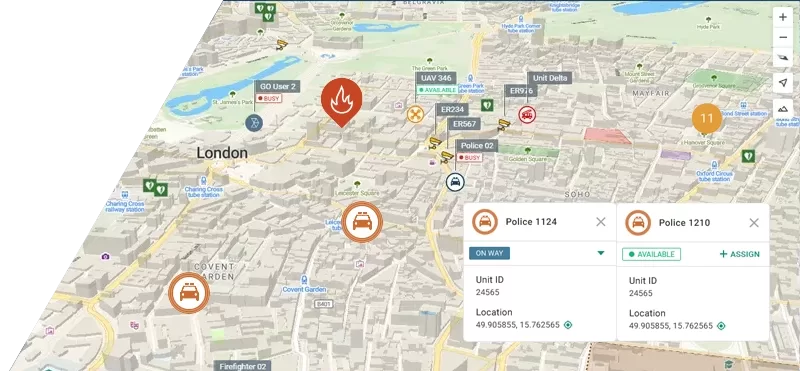
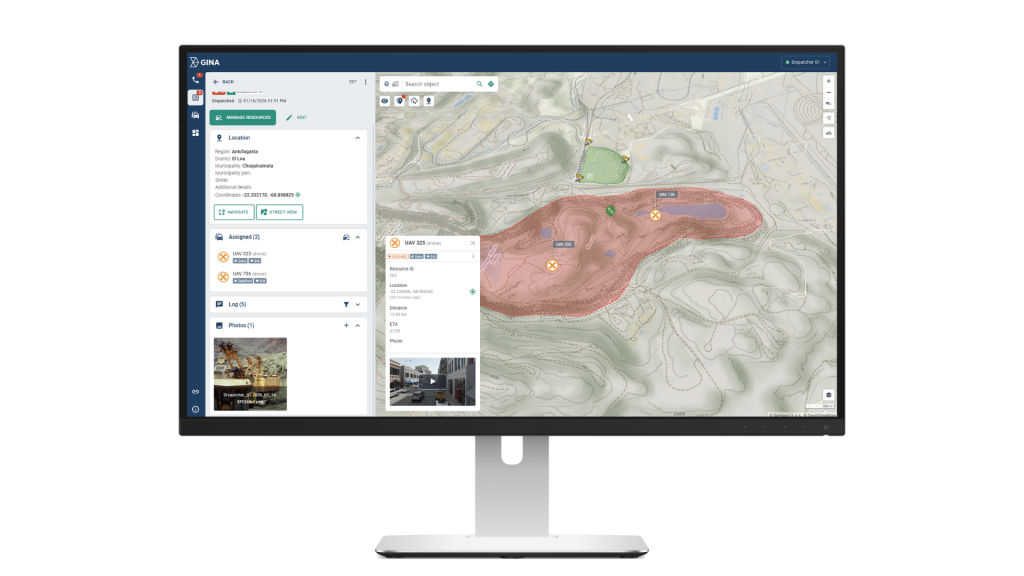
Smart CAD supports integrating CCTV, drones, and environmental sensors into one operational view, where events like perimeter breaches or gas leak indicators trigger alerts linked to a location and an incident. That shortens the path from signal to verified action, which is where downtime usually starts shrinking.
Real-Time Resource Visibility
Incident control depends on knowing where assets are, what they are doing, and which ones are suitable to respond, without dispatch guessing based on stale status updates. This is not only about speed. It reduces congestion in hazardous zones, protects haul routes from turning into bottlenecks, and prevents over-response that leaves other parts of the site under-covered.
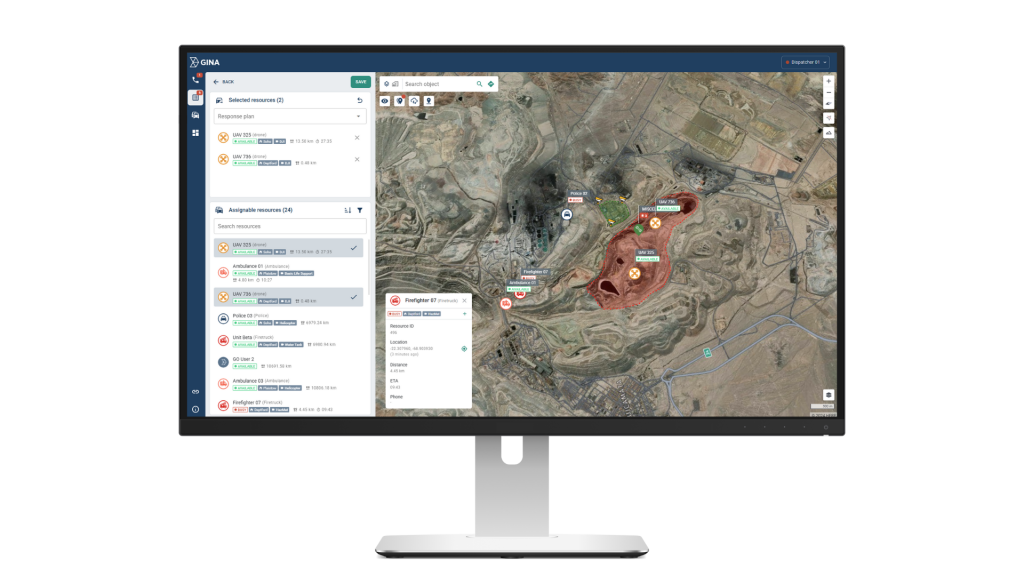
Smart CAD supports real-time tracking of vehicles, machinery, and assets, linking their position to active incidents and highlighting the closest suitable resources. This improves early decisions, reduces unnecessary movements, and limits disruption beyond the incident area.
Reporting and Compliance
Mining operators are expected to keep reporting and documentation precise and consistent. When incident information is spread across separate tools and channels, reporting turns into manual reconstruction, and audits become a search for missing facts.
Smart CAD supports structured reporting where incidents, actions, and responses are recorded into consistent outputs suitable for internal review, investigations, and compliance needs. The incident closes with a complete, usable timeline already captured, so reviews focus on decisions and controls instead of patching missing information.
A Practical Checklist for Evaluating Your Safety System
A mine safety management system is only as effective as its weakest point under pressure. Many platforms perform well in planned scenarios but fragment when multiple teams need to act simultaneously, information is changing fast, and decisions cannot wait. The following checklist covers what a system needs to deliver when an incident is active, not just when conditions are stable.
Before committing to a system, confirm it can do the following:
- Move from first alert to verified situational awareness without requiring manual investigation to confirm what triggered it
- Give dispatch, supervisors, field crews, and management the same live operational picture at the same time
- Define and enforce dynamic site zones across pits, haul roads, processing areas, and contractor boundaries with immediate, location-specific alerts
- Track vehicles, assets, and personnel in real time without relying on manual check-ins or stale status updates
- Issue clear tasking, track progress, and confirm completion within a single operational log rather than across separate channels
- Transfer full incident context automatically across shift handovers so incoming crews do not start from a verbal briefing
- Integrate CCTV, environmental sensors, and drones into one operational view so alerts carry context, not just a signal
- Support lone worker check-in and distress alerting within the same system used for broader incident response
- Produce structured, audit-ready incident reports without manual reconstruction after the fact
If a system cannot deliver on these points consistently, the gaps will show up at the worst possible time. The value of a mine safety management system is not what it does on a quiet day. It is what it holds together when conditions are not.
Conclusion
Poor incident control does not just create messy records. It extends disruption, pulls more of the operation into an event than necessary, and keeps people in uncertain conditions longer than anyone intends. The costs are real but they rarely appear on a single line in a report, which is exactly why they keep recurring.
A mine safety management system should do more than document what happened. It should shorten the path from first alert to verified action, keep responsibility clear across teams and shifts, and produce an incident timeline that stands up to review and audit without anyone having to reconstruct it afterward. That is what separates a system that works on a quiet day from one that holds the operation together when conditions are not.
Smart CAD is built for that standard. If you want to see how it handles real incident scenarios across dispatch, geofencing, sensor integration, and shift handovers, book a demo and we will walk you through it in your operational context or explore how Smart CAD can support your mining operations here.