

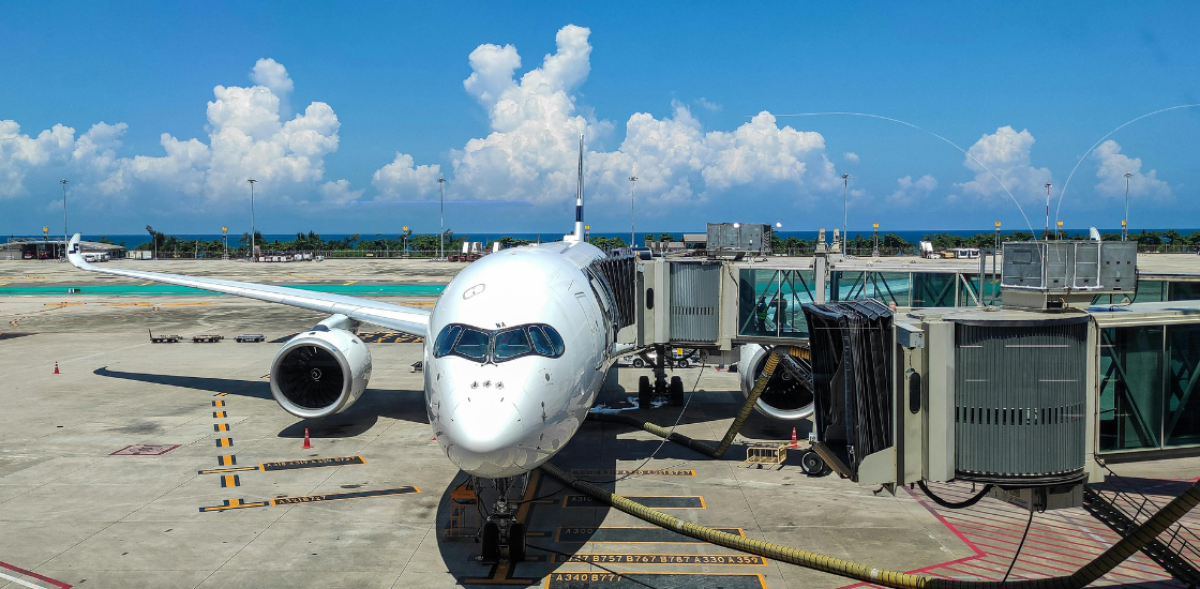
Airport security management software plays a critical role in keeping airport operations safe, coordinated, and resilient. In a highly dynamic environment, small issues can escalate quickly when information and response are not aligned.
An airport brings together multiple stakeholders, including operations, security, emergency response, ground handling, and external partners. Each team plays a critical role, but the overall outcome depends on how well they share situational awareness and act on the same operational priorities.
Table of Contents
Why Airport Security Coordination Breaks Down
In many airports, pressure exposes a familiar pattern. Teams work with capable people and established procedures, yet coordination slows because information is distributed across disconnected tools, channels, and partial views of the situation. When each stakeholder has a different version of what is happening, decisions take longer and the risk of miscommunication increases.
Verification often becomes the main bottleneck. A report is received, details are checked through multiple steps, camera feeds are reviewed in separate systems, phone calls or radio updates fill in gaps, and only then is the incident assigned to the right resource. This delay does not simply affect efficiency. It increases operational uncertainty, especially in airside areas, restricted zones, and high-traffic terminal environments.
Over time, disruption stops being a service issue and becomes a safety and security concern. It affects staff workload, response readiness, and the ability to maintain controlled movement across sensitive areas. Strong airport security management software reduces the likelihood of escalation by improving shared context and shortening the time from detection to coordinated action.
What Modern Airport Security Management Software Needs
Effective airport management relies on two fundamentals: a shared operational picture and a consistent workflow for incidents and tasks. The objective is not to add more dashboards, but to connect stakeholders around the same situational awareness and the same operating process.
Capabilities that typically deliver the greatest impact include:
- A shared operational picture to ensure stakeholders see the same incident status, locations and resources in real time.
- A structured incident workflow that supports clear ownership from the first report through assessment, assignment, coordination, and closure.
- Integrated video and sensor context so operators can verify and understand situations quickly using CCTV and, where relevant, drone imagery or additional feeds.
- Geofencing and automated alerts to strengthen control of restricted areas and critical infrastructure, reducing reliance on manual checks and delayed escalations.
- Reporting and post-incident analysis to support audits, compliance requirements, and continuous improvement through reliable timelines and trend insights.
How Smart CAD Supports Airport Management
Smart CAD supports airport management by bringing situational awareness and incident coordination into a single operational environment. It is designed to help teams detect issues earlier, verify them faster, assign resources with clarity, and maintain a reliable record of actions and outcomes.
In practice, Smart CAD allows airport stakeholders to:
- Operate from one shared operational picture across operations, security, and response teams, improving coordination and reducing duplicated effort.
- Handle incidents through a consistent workflow that speeds up assignment and resolution while keeping status updates clear and traceable
- Use video to support faster verification by connecting relevant CCTV and other visual sources to incidents and map context, improving decision-making under time pressure.
- Strengthen control of sensitive zones with geofences and automated alerts that support quicker response to unauthorized access or unsafe movement.
- Produce audit-ready outputs through structured reporting and incident timelines that support reviews, compliance processes, and learning.
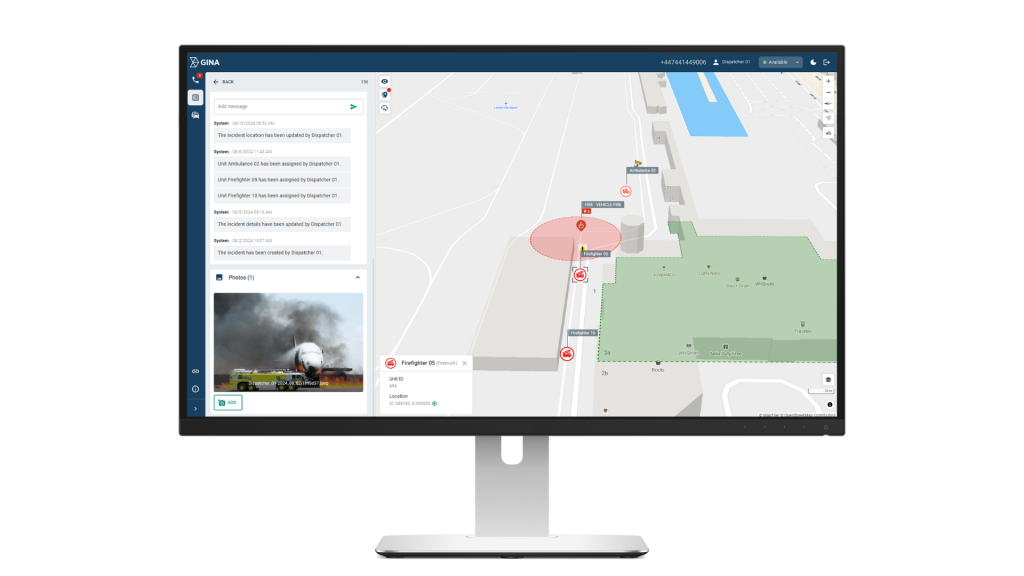
These capabilities are most valuable when conditions change quickly, because they reduce the gap between receiving information and acting on it with confidence.
How This Works in Practice
During a high traffic period, an alert is raised regarding unusual movement near an airside access point. The initial information is limited and requires verification before any escalation.
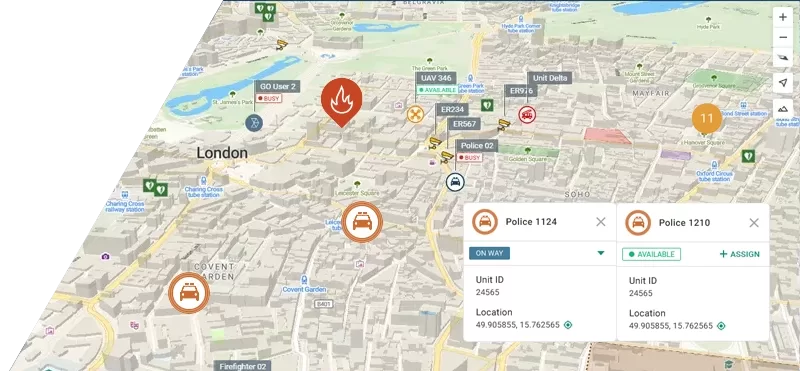
Using Smart CAD, the incident is logged immediately and visible to security, operations, and response teams through a shared operational picture. The access point location is displayed on the map, along with nearby units and active tasks in the area.
Relevant CCTV feeds are linked directly to the incident, allowing operators to verify the situation without switching systems. A patrol unit is assigned through the same workflow, with status updates tracked in real time as the unit approaches the location.
Geofencing provides immediate confirmation that the event is within a restricted area, helping teams respond with the right level of urgency while keeping airport operations aligned.
Once the situation is resolved, all actions, decisions, and timestamps are recorded automatically. The incident is closed with a complete, audit ready timeline that can be reviewed later for compliance, training, or operational improvement.
This scenario reflects how Smart CAD is used in real airport environments to support verification, coordination, and controlled response across security and operations teams.
A practical example of this approach is outlined in this LinkedIn post.
Bringing Control and Clarity to Airport Operations
Airport security management software works best when all stakeholders operate from the same operational picture, follow a consistent incident workflow, and can verify and coordinate actions using real-time context. This approach reduces disruption, supports safer operations, and improves decision-making during routine activity and time critical events.
To see how Smart CAD supports airport security and operational coordination in practice, visit our Airport Management Software solution page.