


Airport emergency preparedness is one of those things every airport takes seriously, until it’s tested. The real question isn’t whether you have a plan. It’s whether that plan holds up when something actually goes wrong.
Emergencies at airports are rarely simple. They involve multiple agencies, hundreds or thousands of passengers, complex infrastructure, and decisions that need to be made in seconds. A delayed response, a miscommunication, or a gap in coordination can turn a manageable situation into a serious one. That’s why preparedness isn’t something you build once and forget about, it’s something you actively maintain.
This post breaks down what a strong airport emergency preparedness approach looks like in practice, from laying the groundwork to making sure your team is ready to act without hesitation. Whether you’re reviewing an existing plan or building one from scratch, these are the areas that matter most.
Table of Contents
Start with the Right Foundation
Before anything else, your airport needs a clear, written emergency plan. Think of it as the single document that answers the most critical question in a crisis: who does what, and when?
A solid plan covers the scenarios that are most likely to happen at your specific airport. Every airport is different. A small regional airport has very different risks than a large international hub. Start by asking what the worst realistic scenarios look like for your facility and build from there. At minimum, your plan should address:
- Aircraft incidents and accidents
- Natural disasters and extreme weather
- Security threats and evacuations
- Hazardous material spills
- Medical emergencies
Keep the language simple and direct. In a high-stress situation, nobody has time to analyze complicated instructions.
Understand Your Regulatory Obligations
Emergency preparedness planning at airports is not optional in most parts of the world, it is a regulatory requirement. While the specific frameworks vary by country and region, the common thread is that certificated or licensed airports are expected to maintain a formal emergency plan, keep it coordinated with all relevant agencies, and test it regularly through exercises.
At the international level, ICAO Annex 14 sets the foundational standard. It requires airports to develop and maintain an aerodrome emergency plan, ensure it is coordinated with local and national response organizations, and exercise it periodically to verify it works in practice. Most national aviation authorities build their own regulations on top of this foundation.
In the United States, this falls under 14 CFR Part 139 and FAA Advisory Circular 150/5200-31C. In Europe, EASA regulations and national civil aviation authority requirements govern airport emergency planning across member states. In the Asia-Pacific region, ICAO standards are implemented through national frameworks overseen by authorities such as CAAS in Singapore, CASA in Australia, or DGCA bodies across Southeast Asia, each with their own specific requirements layered on top.
The details differ, but the principle is consistent: knowing exactly which regulations apply to your airport, staying current with any updates, and ensuring your plan reflects your actual operational reality rather than just satisfying a checklist, is the non-negotiable starting point.
Get Everyone on the Same Page before an Incident
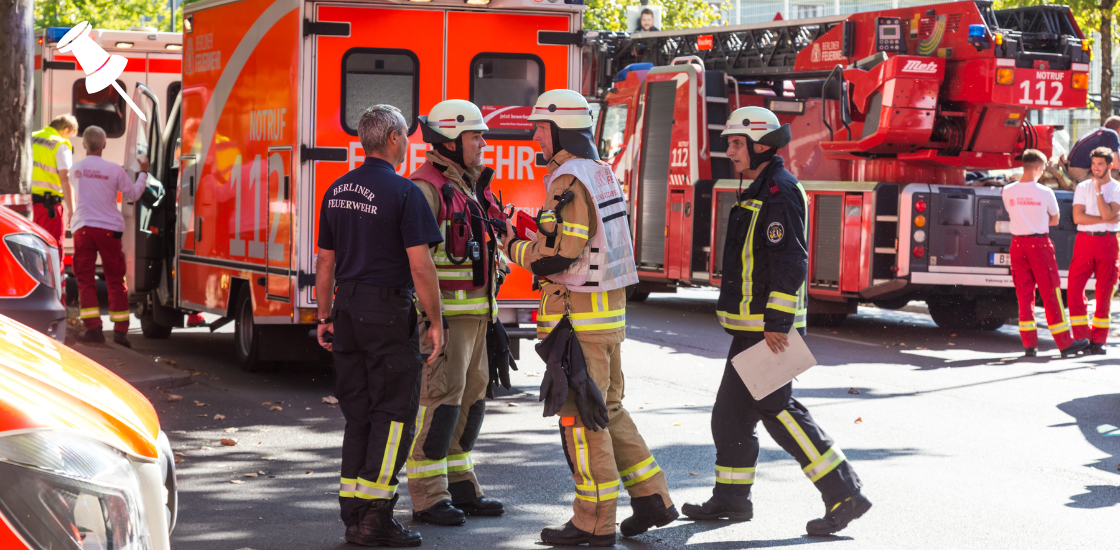
One of the most common failure points in emergency response isn’t a lack of planning. It’s a lack of coordination. Fire departments, law enforcement, EMS, airlines, ground handlers, all of these teams need to know how they fit into your response before an emergency happens, not during one.
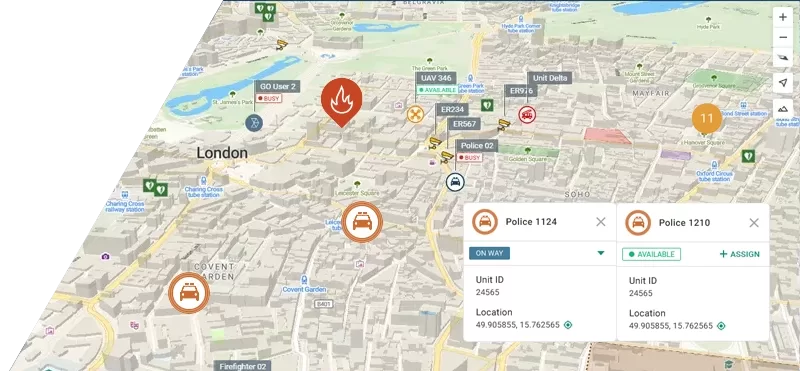
That means establishing clear agreements with external agencies ahead of time. Who responds first? Who takes command? How do you communicate when things are moving fast? A Computer-Aided Dispatch system like GINA’s Smart CAD is built exactly for this. It keeps all responding units visible in one place, so dispatchers always know who’s available, who’s been assigned, and what’s happening on the ground in real time.
Airport Emergency Preparedness Requires Regular Practice
A plan that lives in a drawer isn’t a plan. It’s a document. The difference between the two is practice.
Regular exercises convert written procedures into muscle memory. There are three main exercise types, and each serves a different purpose:
- Tabletop exercises bring stakeholders together in a discussion-based format to walk through scenarios and decision-making without deploying resources. They are relatively low-cost and excellent for identifying gaps in procedures and communication.
- Functional exercises test specific components of the plan such as communications, logistics, or command and control, without a full physical deployment.
- Full-scale exercises simulate a real incident as closely as possible, with personnel, equipment, and agencies responding as they would in an actual emergency. Most aviation authorities require these at regular intervals, and best practice is to run them more frequently than the minimum required.
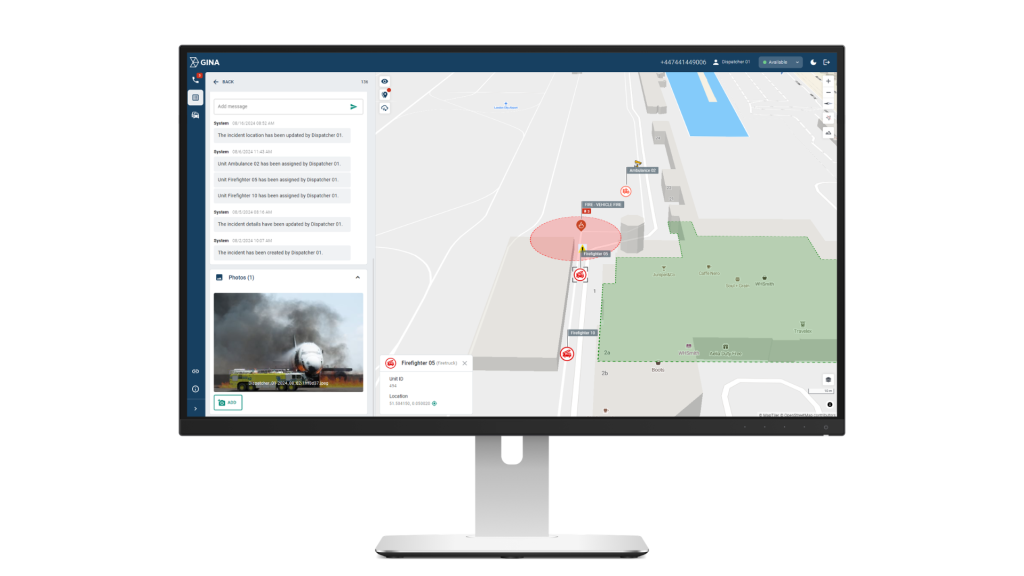
Running a mix of all three throughout the year is far more effective than relying on a single large exercise. After each one, conduct a formal after-action review and document both what worked and what did not. Technology like Smart CAD makes this easier by automatically logging every action during an exercise, including who was notified, response times, and how units were assigned, so you can review exactly where the workflow held up and where it broke down before a real incident exposes the same gaps.
Training should not stop at first responders, either. Ground crews, gate agents, concession workers, and operations staff are all part of the airport environment. A strong airport emergency preparedness culture means everyone knows the basics: where to go, how to report something unusual, and who to take direction from when things escalate.
Use the Right Solution
Modern airport emergency preparedness has moved well beyond paper checklists and radio calls. The right technology makes the entire response faster, smarter, and easier to review after the fact.
For airport emergency operations, the core capabilities to look for are real-time unit visibility, Computer-Aided Dispatch (CAD), automatic incident logging, and interoperability across agencies. Together, these give dispatchers and incident commanders a shared operational picture, reduce the risk of things falling through the cracks, and create a full audit trail for every incident.
For a deeper look at how safety management software fits into airport operations overall, take a look at The Ultimate Guide to Airport Safety Management Software.
GINA Software’s Smart CAD is one example of a platform built specifically for airport emergency operations. It gives dispatchers a real-time overview of all units and resources, speeds up assignment, and automatically logs every action during an incident. When multiple agencies are responding at once, that shared picture reduces confusion and helps ensure nothing gets missed.
To learn more about how Smart CAD supports airport operations, visit our Airport Management Software page.
Keep Your Plan Current
An emergency plan is only as good as its last update. Staff changes, infrastructure evolves, and new threats emerge. Build a regular review into your calendar at least once a year, and after any real incident or significant operational change.
The most effective airport emergency programs treat preparedness as a continuous cycle – plan, train, exercise, review, improve – rather than a project with a completion date. The airports that consistently handle emergencies well aren’t operating on luck. They treat preparedness as an ongoing process, not a one-time task.
Start with an honest review of what you have. If your plan has not been updated in the past year, or has never been properly tested, that review is the most valuable thing you can start with.
Want to see how GINA Software supports airport emergency preparedness in practice? Book a free demo and we will walk you through how Smart CAD can strengthen your emergency operations.