


Airport crisis management is not a theoretical exercise. Every day, airports around the world deal with real emergencies such as fires in terminals, medical incidents on runways, security threats, aircraft accidents, hazardous material spills. Each one requires an immediate, coordinated response. And in most cases, the outcome depends on what happens in the first 60 seconds after the alarm sounds.
This post looks at five types of crises that airports face, what makes each one so demanding to manage, and how the right dispatch solutions make the difference between a fast, controlled response and one that falls apart at the critical moment. If you want to understand the full picture of airport safety systems, our pillar guide The Ultimate Guide to Airport Safety Management Software is the place to start.
Table of Contents
No Room for Error in Aircraft Fires
An aircraft fire is the most time-critical emergency an airport can face. Under FAA Part 139 regulations, at least one rescue and firefighting vehicle must reach the midpoint of the farthest runway within three minutes of the alarm. ICAO standards require ARFF teams to be on scene within 90 seconds of the crash alarm sounding.
That is not a lot of time. And every second spent figuring out which units are available, where they are, or who to notify is a second lost.
The challenge in airport crisis management is that a fire on the runway doesn’t only involve the fire service. It triggers a cascade of actions across multiple teams like ATC, medical, security, ground operations, all of which need to happen at the same time. When those teams are working from separate systems or different information, coordination breaks down exactly when it matters most.
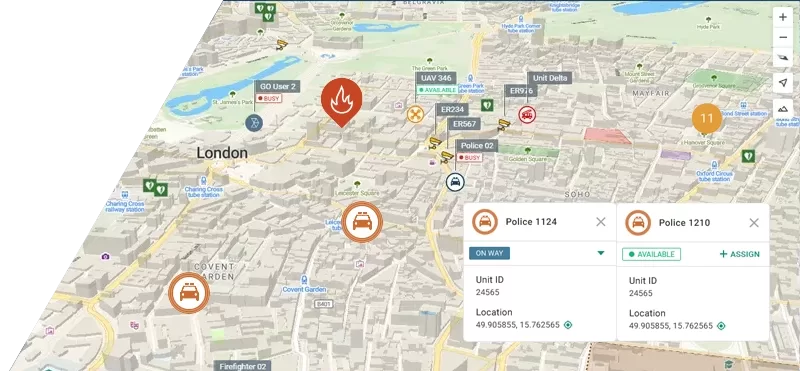
Smart CAD gives dispatchers a real-time overview of every unit on the airport such as their location, availability, and status. When the alarm comes in, the right units can be dispatched immediately, without radio back-and-forth or manual checks. Field teams get the details on their devices before they even reach the scene.
Every Second Counts in Medical Emergencies
Airports handle thousands of passengers every day. Medical emergencies are more common than most people realize. Cardiac arrests, sudden illness, injuries on jet bridges, incidents in crowded terminals. Response time is directly linked to survival.
In the case of cardiac arrest, the chance of survival decreases by approximately 10% for every minute that defibrillation is not provided. Getting the right medical unit to the right location fast is not optional, it is the entire job.
The difficulty in large airports is scale. A terminal can stretch for hundreds of metres. Gates are numbered, but locations are not always clear to someone unfamiliar with the layout. Dispatching the nearest available paramedic or first responder requires knowing, where every unit is and who is free to respond in real time.
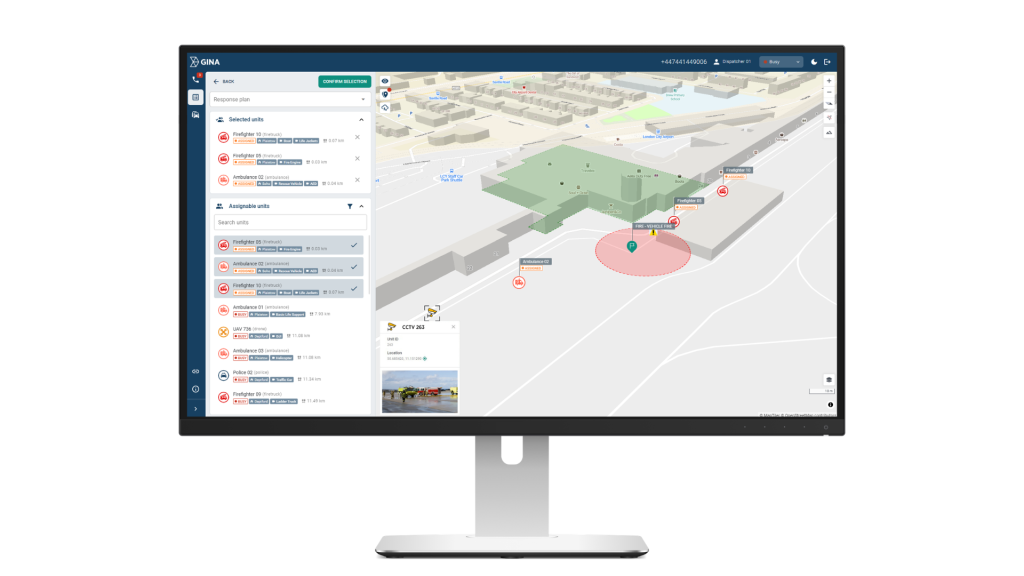
Smart CAD handles this automatically. The system tracks unit positions and suggests the closest available responder based on proximity and availability. The dispatcher doesn’t have to make calls to find out who is free. That decision happens in seconds, not minutes.
Coordinating Security Incidents Under Pressure
A security threat at an airport such as an unattended bag, an access breach, a disturbance in a terminal, puts airport crisis management under a different kind of pressure. The situation is often unclear at the start. Information changes fast. And the response needs to involve security, police, operations, and sometimes airlines and border agencies, all at once.
What usually goes wrong in these situations isn’t a lack of people. It is a lack of shared information. Security teams on the ground see something. They report it. But by the time that information reaches the control room and gets communicated to other teams, the situation has already moved on.
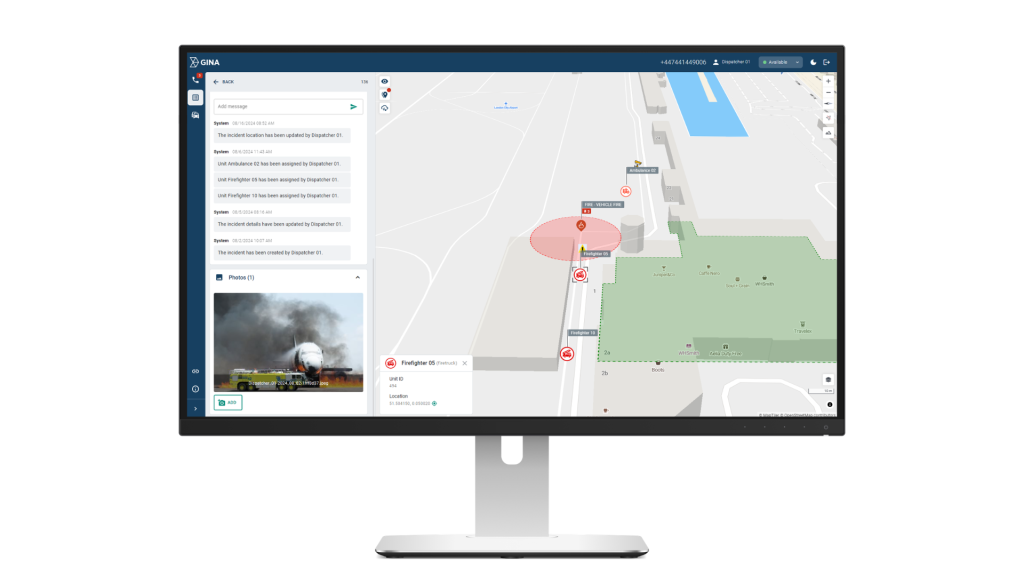
Smart CAD keeps all of that in one place. When a security incident is logged, every relevant team sees it at the same time. Updates go out to field staff instantly through GINA Tablets. The control room sees who has responded, what actions have been taken, and what is still outstanding, all on one screen, without needing separate calls or radio traffic to piece it together.
Getting the Response Right in Hazardous Material Incidents
Airports handle fuel, cleaning chemicals, cargo, and, in some cases, hazardous materials. A fuel spill, a chemical leak, or an accident involving hazardous materials in the cargo hold constitutes a serious emergency. When responding to such an incident, dispatching the wrong unit or the wrong number of responders can make the situation worse rather than better.
These incidents require specialized teams with the right equipment. They also require clear communication with surrounding areas, airlines, and in many cases, civil authorities outside the airport perimeter.
The risk in poorly coordinated airport crisis management is not just to the people on scene. Hazardous materials that aren’t contained quickly can ground flights, close sections of the airport, and trigger regulatory notifications that add hours of disruption.
By enabling dispatchers to see exactly which specialized units are available and communicate with them in real time through a single platform, we can prevent an incident involving hazardous materials from becoming a much bigger problem.
The Challenge of Multi-Agency Emergencies
Some crisis situations at airports cannot be clearly classified into a single category. For example, a runway incursion that results in an aircraft fire. A medical emergency that escalates into a security incident. Or a major accident involving multiple aircraft and hundreds of passengers.
These scenarios require fire services, medical teams, police, airport operations, airlines, and sometimes military or civil emergency services to work together and all at the same time, on the same incident.
Data from IATA’s 2025 Annual Safety Report shows that airlines on structured safety audit programs have an accident rate more than 2.5 times lower than those without. The principle is the same for airports: structured, practiced response processes produce better outcomes.
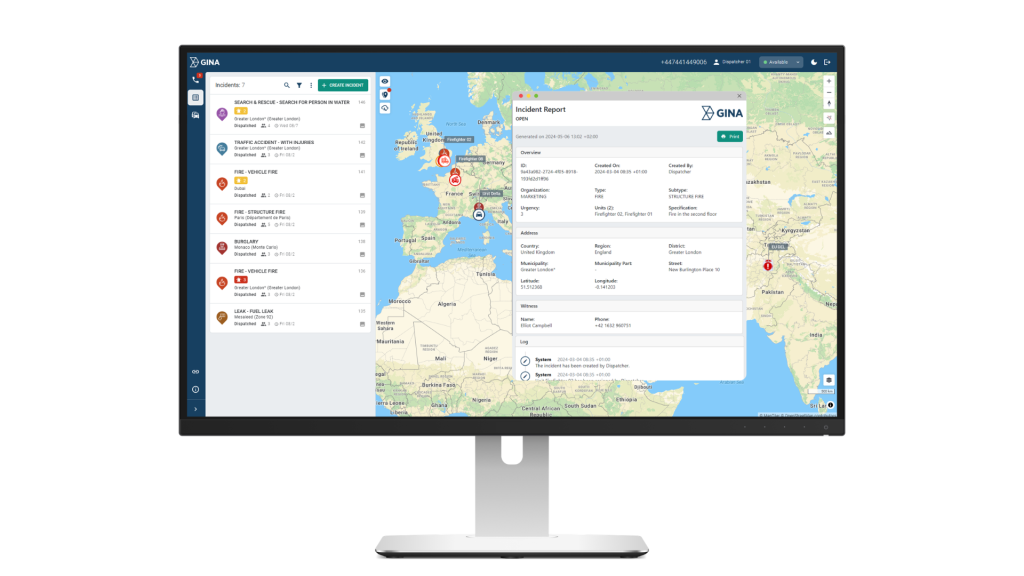
Smart CAD is built for exactly this kind of complexity. Multiple agencies can be connected to the same operational picture. Tasks are assigned and tracked across teams. The control room maintains visibility over the whole response. It knows who is on scene, what has been done, what is still open, without needing to manage a separate communication channel for each agency involved.
After the incident, Smart CAD automatically generates a full record of every action, timeline, and communication. That record supports regulatory compliance, internal reviews, and the kind of honest post-incident analysis that makes airport crisis management better over time.
Being Ready Is a Choice
Every emergency described in this post can be managed well. None of them are unmanageable. What separates airports that handle crises effectively from those that don’t is almost always preparation like the right tools, the right training, and the right processes in place before anything goes wrong.
Over the past decade, the airline industry has made real progress in the area of safety. This progress was no accident. It resulted from targeted investments in systems, people, and processes that enable a coordinated response in situations where every second counts.
Airport crisis management is part of that same effort. And 60 seconds, as it turns out, is both very short and more than enough, if you’re ready.
To see how Smart CAD supports airport safety and emergency response from the ground up, explore Airport Management Software.